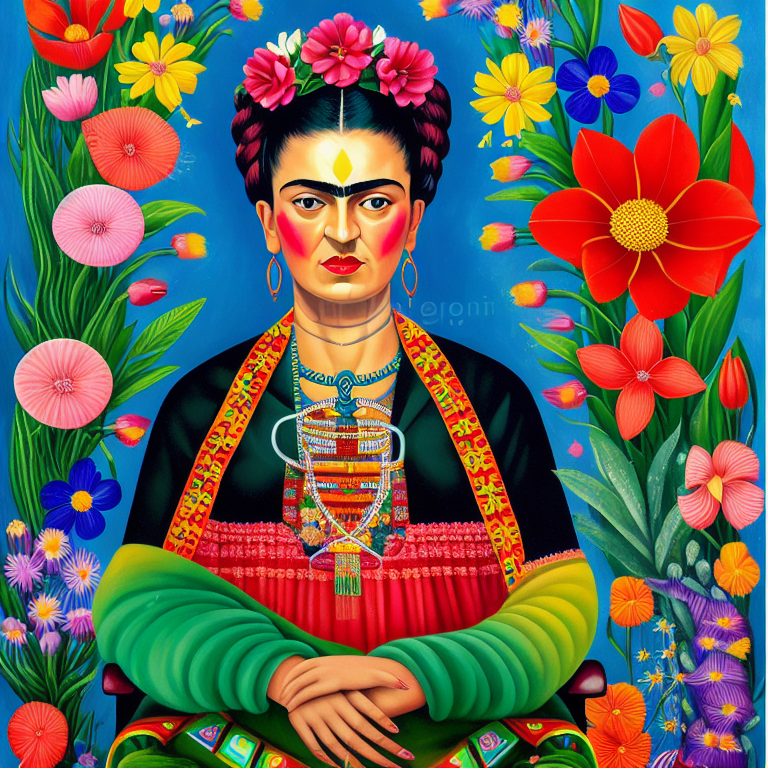
When Frida Kahlo picked up a paintbrush after her devastating bus accident, she was not thinking about becoming famous. She was thinking about survival. The pain was constant, her body broken in more than thirty places, and her future uncertain. But through her art, Frida found a way to transform her suffering into something beautiful and meaningful. Her story is not just about creating paintings – it is about using creativity as medicine for the soul.
The accident that changed everything happened when Frida was just eighteen years old. A streetcar collided with the bus she was riding, and an iron handrail pierced her body, breaking her spine, pelvis, ribs, and leg. She spent months in bed, wearing a plaster corset, unable to move. Most people would have given up, but Frida began to paint. Her parents hung a mirror above her bed so she could see herself, and she started creating self-portraits that showed not just her face, but her pain, her strength, and her unbroken spirit.
Frida’s art was deeply personal from the very beginning. She painted what she knew best – her own body, her emotions, and her experiences. When doctors told her she might never walk again, she painted herself standing tall, surrounded by nature and hope. When the pain became unbearable, she painted it directly on the canvas, showing broken columns and exposed spines. This was not just art for art’s sake – it was art as therapy, as a way to process trauma and reclaim control over her body and her story.
The symbolism in Frida’s work is powerful and intentional. She often included medical imagery like corsets, crutches, and surgical tools, but she transformed them. Instead of showing weakness, these objects became part of her strength. In one famous painting, she wears a metal corset decorated with flowers and butterflies, turning a medical device into something beautiful. This transformation of pain into beauty became her signature style, and it resonated with people around the world who were also struggling with their own challenges.
Color played a huge role in Frida’s healing process. She used bright, vibrant colors that reflected her Mexican heritage and her inner world. Even when painting dark subjects, she filled her canvases with life and energy. The colors were not just decorative – they were emotional medicine. Bright yellows and reds expressed her passion and vitality, while deep blues and greens connected her to nature and spirituality. Through color, she could express feelings that words could not capture.
Frida’s connection to nature was another important part of her healing journey. She filled her paintings with plants, animals, and natural elements that represented growth, renewal, and resilience. Monkeys, which appear frequently in her work, symbolized protection and companionship. Flowers represented beauty and the cycle of life. By surrounding herself with these natural symbols, both in her art and in her actual garden at Casa Azul, Frida created a healing environment that nurtured her spirit.
The physical act of painting was itself therapeutic for Frida. When she held a brush, she was no longer just a patient – she was an artist, a creator, someone with purpose and vision. The concentration required for painting helped her forget the pain, even if only for a little while. Each brushstroke was a small victory over her limitations. Over time, painting became as essential to her survival as medicine or physical therapy.
Frida’s art also helped her process complex emotions about love, loss, and identity. Her relationship with fellow artist Diego Rivera was passionate but turbulent, and she painted their story with honesty and intensity. When she experienced miscarriages and could not have children, she transformed that grief into powerful imagery. Her paintings became a diary of her inner life, allowing her to express feelings that were too painful or complicated to speak aloud.
The way Frida used art to heal continues to inspire people today. Her story shows that creativity can be a powerful tool for dealing with trauma, chronic pain, and emotional suffering. She proved that art does not have to be about perfect technique or commercial success – it can be about survival, about finding meaning in suffering, about transforming pain into something that can help others. Her legacy is not just in the paintings she left behind, but in the example she set for using art as medicine.
Modern research supports what Frida discovered through her own experience. Studies have shown that creative expression can reduce stress, improve mood, and even help with physical pain management. Art therapy is now recognized as a legitimate form of treatment for people dealing with trauma, illness, and emotional challenges. Frida was practicing art therapy before it had a name, and her work continues to demonstrate its power.
The impact of Frida’s healing journey through art extends far beyond her own life. She has become an icon for anyone who has faced adversity and found strength through creativity. Her paintings speak to people who are dealing with chronic illness, disability, heartbreak, and loss. She showed that it is possible to take the broken pieces of your life and create something whole and beautiful from them. This message of resilience and transformation continues to resonate with new generations of artists and art lovers.
Frida’s approach to healing through art was holistic. She understood that mind, body, and spirit are connected, and she used her creativity to address all aspects of her being. She painted her physical pain, but she also painted her hopes, her dreams, her cultural identity, and her relationships. This comprehensive approach to healing through art is something that modern practitioners continue to study and apply in therapeutic settings.
The accessibility of Frida’s art is another reason why her story of healing through creativity continues to inspire. She painted in a style that was direct and emotional, using symbolism that anyone could understand. You did not need an art degree to feel the power of her work. This accessibility made her message of healing through art available to everyone, not just art experts or collectors. She democratized the healing power of creativity.
Frida’s legacy teaches us that healing is not about erasing pain or returning to some imagined perfect state. It is about finding ways to live fully and meaningfully with whatever challenges we face. Through her art, she showed that pain can be transformed, that suffering can have purpose, and that creativity can be a lifeline. Her story reminds us that we all have the capacity to use our own creativity to heal, to express, and to connect with others who share our struggles.
Today, Frida Kahlo’s paintings hang in museums around the world, but their true power lies in their ability to speak to the human experience of pain and healing. Each painting is a testament to her courage, her creativity, and her determination to find beauty and meaning in the midst of suffering. Her story continues to inspire artists, therapists, and anyone who believes in the healing power of creativity.
Leave a Reply