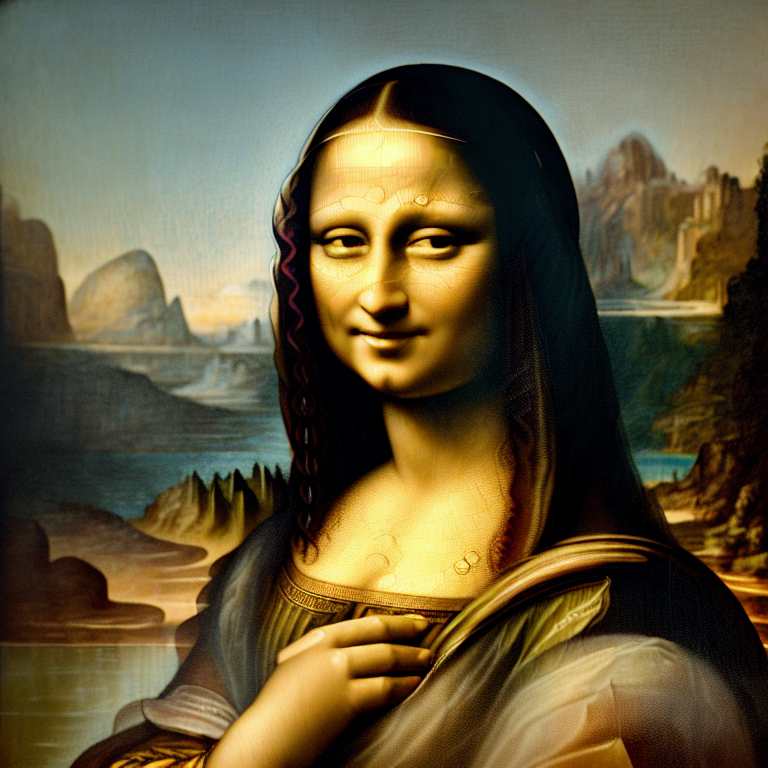
The Mona Lisa is one of the most famous paintings in the world, but most people don’t realize how many secrets are hidden in this masterpiece. Painted by Leonardo da Vinci in the early 1500s, this portrait of a woman with a mysterious smile has fascinated people for centuries. When you look closely at the painting, you’ll discover hidden symbols, clever techniques, and even possible mistakes that tell us more about the artist and his methods.
The painting shows a woman sitting in front of a dreamy landscape background. Her smile is what most people notice first – it seems to change when you look at it from different angles. This isn’t just your imagination. Leonardo used special painting techniques that make her expression appear different depending on where you stand and how the light hits the painting.
The Hidden Symbols in the Mona Lisa
Leonardo da Vinci was known for hiding symbols and codes in his artwork. The Mona Lisa is no exception. If you look closely at the background, you’ll notice two different landscapes on each side of the woman. The left side shows a path that gets smaller as it goes back, while the right side has a bridge that does the same thing. This creates a strange effect where the painting feels like it’s tilting slightly to the left.
The woman’s clothing also holds secrets. Her dress has a very low neckline for the time period, which was unusual for a married woman. Some art experts think this might be a clue about who she really was. The veil over her hair was typically worn by pregnant women or those who had just given birth, which could mean the painting was created to celebrate a new baby in her family.
Why Her Smile Changes
The famous smile of the Mona Lisa isn’t just painted – it’s created through a special technique Leonardo invented called sfumato. This Italian word means “smoky” and describes how Leonardo blended colors and tones together without sharp lines. He used many thin layers of almost transparent paint to build up the face, especially around the mouth and eyes.
This technique makes the smile appear to change when you look at it. If you focus on her eyes, the corners of her mouth seem to turn up in a slight smile. But if you look directly at her mouth, the smile seems to disappear. Leonardo understood how our eyes work and used this knowledge to create one of the most mysterious expressions in art history.
The Mathematical Secrets
Leonardo da Vinci loved mathematics and geometry, and you can find these elements hidden in the Mona Lisa. The painting fits perfectly into a golden rectangle, which is a special mathematical proportion that many artists believe creates the most pleasing shapes. If you measure the painting, you’ll find that the ratio of its length to its width is very close to 1.618, known as the golden ratio.
Even her face follows mathematical rules. The distance between her eyes, the length of her nose, and the shape of her face all relate to each other through mathematical proportions. Leonardo believed that beauty came from perfect proportions, and he used these ideas to create a face that looks both realistic and ideal at the same time.
The Landscape Mystery
The background of the Mona Lisa is just as interesting as the woman herself. The landscape shows a mix of water, mountains, and strange rock formations that don’t match any real place. Some people think Leonardo created this imaginary landscape by combining elements from different places he had seen or read about.
The two sides of the background don’t match perfectly. The left side is lower than the right side, creating a kind of imbalance. This wasn’t a mistake – Leonardo did this on purpose to create a more dynamic and interesting composition. The winding paths and distant water in the background also create a sense of depth that makes the painting feel three-dimensional.
The Hidden Codes Theory
Some people believe Leonardo hid secret codes and messages in the Mona Lisa. One popular theory suggests that if you look at the painting in a mirror, you can see hidden images or letters. Others think the positions of the woman’s hands form special symbols or that the landscape contains secret shapes.
While many of these theories aren’t proven, they show how much people want to find hidden meanings in this painting. Leonardo was known to write in mirror script (backwards writing), so some believe he might have hidden messages that can only be read in a mirror. However, most art experts think the painting’s mysteries are more about technique and symbolism than secret codes.
The Restoration Secrets
When art experts look at the Mona Lisa very closely using special cameras and lights, they can see things that aren’t visible to the naked eye. These studies have revealed that Leonardo made many changes to the painting as he worked on it. For example, the position of the woman’s left hand was changed several times, and the background was painted differently than originally planned.
These changes, called pentimenti, show us how Leonardo thought and worked. He didn’t just paint what he saw – he experimented and made adjustments to create the perfect composition. The fact that he kept changing things even in a small portrait shows how important this painting was to him.
How Leonardo Created the Effect
The way Leonardo painted the Mona Lisa was revolutionary for his time. He used oil paints, which were relatively new in Italy, and developed special techniques for using them. Instead of painting with thick, visible brushstrokes, he built up the image with many thin layers of paint. This created a soft, almost glowing effect that was unlike anything painted before.
He also used a technique called aerial perspective in the background. This means he made the distant parts of the landscape look hazier and bluer to create the illusion of depth. This technique is still used by artists today and was one of Leonardo’s important contributions to painting.
The Famous Theft and Its Impact
In 1911, the Mona Lisa was stolen from the Louvre Museum in Paris. This theft actually made the painting much more famous than it had been before. When it was recovered two years later, millions of people wanted to see it. The theft created a kind of celebrity status for the painting that continues today.
The theft also led to better security for artwork and more careful study of famous paintings. When the Mona Lisa was returned, it was examined very carefully, and this examination revealed many of the technical details we know about the painting today. The theft turned a great painting into a global icon.
If you want to learn more about how other famous paintings hide secrets and meanings, check out our article on Why the Mona Lisa Smiles: The Science Behind Her Mystery. You can also discover how different art movements changed painting forever in our piece about How the Impressionists Broke All the Rules of Art.
For those interested in seeing famous artworks in person, our guide on Top Tips for Visiting Art Galleries Like a Pro offers helpful advice for making the most of your museum visits. And if you’re curious about how art can help people heal, read about How Frida Kahlo Used Art to Heal Her Pain.
Leave a Reply