Category: Famous Artists

  • How Japanese Art Revolutionized Monet’s Masterpieces

    How Japanese Art Revolutionized Monet’s Masterpieces

    When Claude Monet gazed upon a Japanese print for the first time in the 1860s, little did he know that this moment would forever transform his artistic vision. The influence of Japanese art on Monet wasn’t just a passing fancy—it became a fundamental shift that would reshape Western painting forever. This unexpected cultural exchange between 19th-century France and Japan created one of the most fascinating artistic dialogues in history.

    The story begins with the sudden opening of Japan to Western trade in 1853. Within years, Japanese woodblock prints—known as ukiyo-e—flooded European markets. These affordable artworks depicted everyday scenes, landscapes, and courtesans with a freshness and perspective that shocked European artists. For Monet, who would become the movement’s most devoted practitioner, these prints offered something revolutionary: a new way of seeing the world.

    Monet’s First Encounter with Japanese Aesthetics

    Monet discovered Japanese prints through his close friend and fellow artist Édouard Manet. The bold compositions, unusual viewpoints, and vibrant colors of ukiyo-e masters like Hokusai and Hiroshige captivated him immediately. Unlike the formal academic training he received in France, Japanese art celebrated spontaneity and direct observation of nature.

    The French called these prints “japonaiserie,” and they became wildly popular among artists. Monet began collecting them voraciously, eventually amassing over 200 pieces. He hung them throughout his home and studio, studying their techniques obsessively. The influence was immediate and profound—his paintings began showing flatter perspectives, cropped compositions, and a new sensitivity to pattern and design.

    The Garden at Giverny: A Living Japanese Canvas

    Perhaps nowhere is Monet’s love for Japanese art more evident than in his magnificent garden at Giverny. In 1883, he rented a house with extensive grounds in Normandy. By 1890, he owned the property and began transforming it into what he called his “most beautiful work of art.”

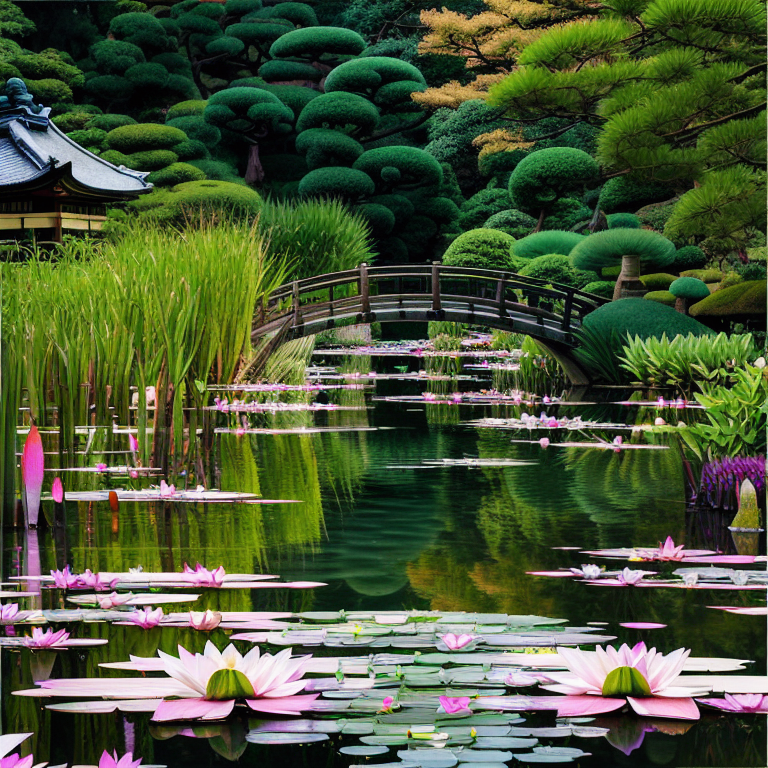
    The centerpiece was the iconic Japanese bridge, draped in wisteria and reflected in the pond below. This wasn’t mere decoration—it was a direct homage to the Japanese landscapes he admired. Monet carefully selected water lilies from South America and Egypt, creating the floating gardens that would become the subject of his most famous series. The curved bridge, the diagonal paths, and the careful arrangement of plants all reflected Japanese compositional principles.

    Breaking Western Perspective Rules

    One of the most significant ways Japanese art influenced Monet was through perspective. Traditional Western painting relied on linear perspective, creating depth through converging lines. Japanese artists, however, often used elevated viewpoints, bird’s-eye perspectives, and compositions that ignored conventional rules of space.

    Monet embraced these techniques wholeheartedly. In works like “The Japanese Footbridge,” he abandoned traditional perspective entirely. The bridge arcs dramatically across the canvas, while water lilies float in the foreground without clear spatial relationships. This flattening of space wasn’t just stylistic—it was philosophical, suggesting that all elements in nature held equal importance.

    Color Revolution: Beyond the Western Palette

    Japanese prints introduced Monet to a bolder, more experimental approach to color. Ukiyo-e artists used vibrant, sometimes unnatural colors to capture mood and atmosphere rather than literal representation. This aligned perfectly with Monet’s growing interest in capturing the ephemeral qualities of light.

    His series paintings—haystacks, poplars, and especially water lilies—show this Japanese-inspired color sensibility. He painted the same subject under different lighting conditions, using color to convey time, season, and emotion. The water lily paintings, with their dreamlike purples, blues, and greens, seem to float between reality and imagination, much like Japanese landscapes that prioritized feeling over precision.

    The Art of Everyday Beauty

    One of the most profound influences of Japanese art on Monet was the elevation of everyday subjects. Ukiyo-e prints celebrated ordinary life—geisha walking through cities, fishermen at work, simple domestic scenes. This philosophy of finding beauty in the mundane resonated deeply with Monet.

    His garden paintings, haystacks, and Rouen Cathedral series all demonstrate this Japanese principle. Rather than painting grand historical scenes or mythological subjects (as academic tradition demanded), Monet found infinite variation in the ordinary. A haystack under morning light became as worthy of contemplation as any royal portrait. This democratization of subject matter was revolutionary.

    Brushwork and the Spirit of Spontaneity

    Japanese art’s emphasis on quick, expressive brushwork also transformed Monet’s technique. Ukiyo-e prints, created through a meticulous process of carving and printing, nonetheless conveyed a sense of immediacy and vitality. Monet adapted this energy to his oil paintings, developing the loose, visible brushstrokes that became characteristic of Impressionism.

    His later works, particularly the water lily murals at the Musée de l’Orangerie in Paris, show this influence most clearly. The massive canvases swirl with energetic marks that seem to dance across the surface. Up close, they appear abstract and chaotic, but from a distance, they resolve into luminous water gardens. This approach mirrors the Japanese concept of capturing the essence or spirit of a subject rather than its exact appearance.

    The Global Art Exchange

    The influence wasn’t one-directional. Just as Japanese art transformed Western painting, Western interest helped revive traditional Japanese printmaking techniques. Artists in both cultures began studying each other’s methods, creating a rich cross-pollination of ideas.

    Monet’s success also inspired other French artists to explore Japanese themes. The entire Impressionist movement felt this influence, though Monet remained its most devoted Japanese art enthusiast. His work demonstrates how cultural exchange can lead to entirely new artistic languages.

    Monet’s Legacy: A Bridge Between Worlds

    When Monet died in 1926, he left behind not just beautiful paintings but a new way of seeing. His Japanese-inspired works taught Western audiences to appreciate subtlety, pattern, and the beauty of everyday moments. The influence extended far beyond painting—it affected garden design, architecture, and decorative arts.

    Today, visitors to Giverny can walk through Monet’s living Japanese canvas, crossing the green bridge and watching water lilies drift across the pond. The experience connects us to that moment in the 1860s when a French artist first encountered Japanese prints and saw the world anew.

    Frequently Asked Questions

    What specific Japanese artists influenced Monet the most?

    Hokusai and Hiroshige were Monet’s primary influences. He particularly admired Hokusai’s “Thirty-Six Views of Mount Fuji” series and Hiroshige’s landscape prints. These artists’ innovative compositions and treatment of natural subjects directly inspired Monet’s approach to painting.

    Did Monet ever visit Japan?

    No, surprisingly, Monet never traveled to Japan despite his deep appreciation for Japanese art. He experienced Japanese aesthetics entirely through prints and artifacts available in France. This makes his interpretation purely visual rather than experiential, which may explain why his “Japanese” works feel more like French dreams of Japan than authentic representations.

    How many Japanese prints did Monet own?

    Monet collected approximately 200 Japanese prints throughout his lifetime. He displayed them throughout his home at Giverny and continued acquiring new pieces until his death. His collection included works by nearly all the major ukiyo-e artists of the 19th century.

    How did Japanese art influence Monet’s painting technique?

    Japanese art influenced Monet’s technique in several ways: he adopted flatter perspectives, used more vibrant and unconventional color combinations, developed looser brushwork, and began cropping his compositions in ways that felt more spontaneous and modern. The influence can be seen most clearly in his water lily series and garden paintings.

    Why did Japanese art become so popular in 19th-century France?

    Japanese art became popular in France after the 1853 opening of Japan to Western trade ended 200 years of isolation. The sudden availability of affordable, exotic artworks fascinated European artists and collectors. Japanese aesthetics offered a fresh alternative to academic traditions, emphasizing beauty in everyday subjects and innovative compositions.

    How is Monet’s Japanese bridge different from actual Japanese bridges?

    Monet’s bridge at Giverny is a romanticized interpretation rather than an authentic Japanese design. While it incorporates Japanese elements like the curved shape and simple wooden construction, it’s adapted for a European garden context. The bridge serves more as a symbolic reference to Japanese art than a faithful reproduction.

    What other Western artists were influenced by Japanese art?

    Many artists felt Japanese influence, including Vincent van Gogh (who painted his own version of Hiroshige’s prints), Edgar Degas, Mary Cassatt, and James McNeill Whistler. The entire Art Nouveau movement also drew heavily from Japanese design principles. For more on artistic influences, you might enjoy reading about how Van Gogh’s Starry Night contains hidden messages that reflect his artistic journey.

    Conclusion

    The influence of Japanese art on Monet represents one of the most beautiful examples of cross-cultural artistic exchange in history. What began as a fascination with exotic prints evolved into a complete transformation of how Western art could see and represent the world. Monet didn’t just borrow Japanese techniques—he absorbed their philosophy, their appreciation for nature’s fleeting beauty, and their belief that art should capture feeling rather than mere appearance.

    His water lily paintings, Japanese bridge, and garden at Giverny stand as lasting monuments to this cultural dialogue. They remind us that great art often emerges from the meeting of different traditions, and that sometimes the most revolutionary ideas come from looking at the world through someone else’s eyes. Monet’s Japanese-inspired works continue to captivate viewers because they speak a universal language of beauty, one that transcends cultural boundaries while celebrating them.

    The next time you stand before a Monet water lily painting or stroll across his green bridge, remember that you’re witnessing not just the vision of a French Impressionist, but the beautiful conversation between East and West that forever changed the course of art history.

    If you’re inspired by how artists like Monet transform their surroundings into masterpieces, you might enjoy learning how to curate your own stunning art gallery at home, creating spaces that celebrate artistic vision and cultural exchange.
  • How Michelangelo Painted the Sistine Chapel Ceiling: A Master’s Journey

    How Michelangelo Painted the Sistine Chapel Ceiling: A Master’s Journey

    Imagine standing in the Sistine Chapel, your neck craned upward, staring at one of the most incredible artistic achievements in human history. The ceiling above you stretches like a painted sky filled with muscular figures, biblical scenes, and divine drama. This is Michelangelo’s masterpiece – a work that took four years of backbreaking labor, innovative engineering, and unparalleled artistic vision to complete.

    The story of how Michelangelo painted this ceiling is not just about art – it’s about determination, ingenuity, and the human spirit’s capacity to create beauty against all odds. When Pope Julius II commissioned the young sculptor to paint the ceiling in 1508, Michelangelo was reluctant. He considered himself primarily a sculptor, not a painter, and the task seemed impossibly daunting. The ceiling was approximately 40 meters long and 13 meters wide – over 1,100 square meters of surface to cover. But what followed would become one of the most celebrated artistic achievements of the Renaissance.

    The Challenge of the Canvas Above

    The physical challenge of painting a ceiling presented problems that had never been fully solved before. Michelangelo and his team had to design a special scaffolding system that would allow painters to work above their heads for hours at a time. Unlike the popular myth suggests, Michelangelo didn’t lie on his back to paint. Instead, he stood on a scaffolding platform he designed himself, which was suspended just below the ceiling.

    This position was incredibly uncomfortable and physically demanding. Michelangelo wrote letters describing how paint dripped into his face, how his neck became permanently strained, and how the effort of reaching upward caused constant pain. The conditions were so harsh that he later suffered from eye problems that affected his vision for months after completing the work.

    The materials themselves posed another challenge. Michelangelo used the fresco technique, which involves applying paint to wet plaster. This method requires incredible speed and precision because the artist must complete each section before the plaster dries. Any mistake means chipping away the entire section and starting over. The chapel’s curved ceiling also meant that Michelangelo had to account for perspective – what looked correct from 20 meters below would appear distorted if painted flat.

    Michelangelo’s Revolutionary Design Approach

    When Michelangelo began planning the ceiling, he completely rejected the original commission to paint the twelve apostles. Instead, he proposed an ambitious program featuring over 300 figures arranged in a complex architectural framework. His design divided the ceiling into nine central panels depicting scenes from the Book of Genesis, surrounded by prophets, sibyls, and countless smaller figures.

    The centerpiece panels show the creation of the world, from God separating light from darkness to the creation of Adam and Eve, their expulsion from Eden, and various scenes from Noah’s story. Surrounding these central narratives are massive painted architectural elements that don’t actually exist – pilasters, cornices, and brackets that create the illusion of a much more elaborate ceiling structure.

    What makes Michelangelo’s approach revolutionary is how he integrated sculpture-like figures into a painted space. His figures have the weight, musculature, and three-dimensional presence of carved stone, yet they exist in a painted world. This synthesis of painting and sculpture would influence artists for centuries to come and helped establish the High Renaissance style.

    The Color Revolution: From Dull to Dazzling

    When the Sistine Chapel ceiling was first revealed in 1512, the colors were actually much darker and more subdued than what we see today. The vibrant blues, greens, and reds that characterize the ceiling now are the result of a massive restoration project completed in the 1990s. This restoration revealed that Michelangelo had used brilliant, expensive pigments including ultramarine blue made from lapis lazuli – a color so costly it was often worth more than gold.

    The restoration process sparked intense debate in the art world. Some critics argued that the cleaning had removed a crucial “patina” that was part of the work’s character. Others celebrated the revelation of Michelangelo’s original brilliant palette. What’s clear is that the artist intended his work to be seen in living color, not the muted browns and grays that centuries of candle smoke and grime had created.

    Michelangelo’s color choices were revolutionary for his time. He used color not just to describe form but to create emotional impact and guide the viewer’s eye across the vast ceiling surface. The prophet Jonah, for instance, sits in a massive painted throne with brilliant blue robes that draw the eye from anywhere in the chapel. This use of color as a compositional tool was innovative and influenced generations of artists who followed.

    The Human Cost: Michelangelo’s Physical Sacrifice

    The physical toll of painting the Sistine Chapel ceiling on Michelangelo cannot be overstated. He worked almost entirely alone after firing his assistants, who he felt couldn’t meet his exacting standards. This meant that every brushstroke on that ceiling came from his own hand – an almost unimaginable feat of endurance and concentration.

    In a famous sonnet he wrote during the painting process, Michelangelo described his physical suffering: “I’ve grown a goitre by dwelling in this den, / As cats from stagnant streams in Lombardy, / Or in what other land they hap to be – / Which drives the belly close beneath the chin.” He goes on to describe how his stomach is pressed into his chin, his beard pointing toward heaven, and how his loins have “penetrated to my paunch.”

    The work was so demanding that Michelangelo often slept in his clothes, too exhausted to change. He maintained a furious pace, completing the entire ceiling in just over four years – an incredible achievement considering the scale and complexity of the work. The physical and mental strain was so intense that he suffered what we would now recognize as severe burnout and depression.

    Engineering Marvels: The Scaffolding System

    The scaffolding system Michelangelo designed was a feat of engineering in itself. Rather than build a structure that bridged the entire chapel (which would have required holes in the newly completed walls), he created a system of platforms supported by brackets inserted into holes in the wall near the top of the windows. These platforms could be moved as needed to access different parts of the ceiling.

    This system had several advantages. It allowed natural light to enter the chapel from the windows below, essential for the detailed work Michelangelo was doing. It also meant that the walls remained undamaged – crucial since the lower portions had been painted by Botticelli and other Renaissance masters whose work Michelangelo respected.

    The scaffolding had to support not just Michelangelo but also his materials – large quantities of wet plaster, pigments, brushes, and other supplies. It needed to be stable enough to allow precise work but also movable enough to access the entire ceiling surface. The fact that Michelangelo designed and implemented this system himself speaks to his genius as both an artist and an engineer.

    Symbolism and Hidden Meanings in the Artwork

    Every element of the Sistine Chapel ceiling carries symbolic meaning, creating a complex visual theology that rewards careful study. The arrangement of figures isn’t random – it follows a carefully planned program that tells the story of humanity’s relationship with God, from creation through fall and eventual redemption.

    The famous Creation of Adam panel, where God’s finger nearly touches Adam’s, is perhaps the most recognized image from the ceiling. But few notice the hidden details: God is depicted in a swirling cloak that many art historians believe represents a human brain, suggesting that God is not only giving Adam life but also the gift of intellect and consciousness.

    The sibyls and prophets surrounding the central panels represent the anticipation of Christ’s coming – the pagan sibyls foretelling what the Hebrew prophets proclaimed. Each figure is individualized with specific attributes and expressions that convey their unique character and message. The Libyan Sibyl, for instance, is shown with a massive book, representing wisdom, while her powerful physique demonstrates Michelangelo’s mastery of human anatomy.

    The Legacy: How It Changed Art Forever

    When Michelangelo unveiled the completed ceiling in October 1512, it immediately established new standards for what painting could achieve. The combination of monumental scale, complex composition, and anatomical precision set a benchmark that influenced artists for generations. Students traveled from across Europe to study the ceiling, making Rome a major center of artistic pilgrimage.

    The impact on artistic technique was profound. Michelangelo’s handling of the male nude figure – powerful, muscular, and emotionally expressive – became the standard for academic art training for centuries. His integration of architecture, sculpture, and painting into unified compositions influenced everything from Baroque ceiling paintings to modern installation art.

    Perhaps most importantly, the Sistine Chapel ceiling demonstrated that a single artist could conceive and execute a work of such complexity and scale that it seemed to redefine the boundaries of human achievement. This idea – that art could be a vehicle for individual genius to express universal truths – became a cornerstone of Western artistic tradition.

    Frequently Asked Questions (FAQ)

    How long did it take Michelangelo to paint the Sistine Chapel ceiling?

    Michelangelo worked on the ceiling for approximately four years, from 1508 to 1512. This timeline is remarkable considering the scale of the work – over 1,100 square meters containing more than 300 figures. He worked almost entirely alone after dismissing his assistants, making this one of the most intensive solo artistic endeavors in history.

    Did Michelangelo really paint while lying on his back?

    No, this is a common myth. Michelangelo actually stood on specially designed scaffolding platforms that allowed him to work directly facing the ceiling from a close distance. While this position was extremely uncomfortable and caused significant physical strain, it was not the same as lying flat on his back. Letters and accounts from the time confirm he stood while working.

    How much did the Sistine Chapel ceiling restoration cost?

    The major restoration of the Sistine Chapel ceiling, completed between 1980 and 1994, cost approximately $3.5 million. This controversial restoration removed centuries of dirt, soot, and previous restoration attempts to reveal Michelangelo’s original bright color palette. The project was funded by Nippon Television Network Corporation of Japan in exchange for the exclusive rights to photograph and videotape the restoration process.

    Can visitors still see the original colors Michelangelo used?

    Yes, thanks to the restoration completed in the 1990s, visitors can now see the ceiling much closer to how Michelangelo originally painted it. The restoration revealed brilliant blues, greens, and reds that had been obscured by centuries of grime. However, some debate continues about whether the cleaning removed a desirable patina or revealed the true intended appearance of the work.

    Why did Michelangelo agree to paint the ceiling if he was primarily a sculptor?

    Initially, Michelangelo was reluctant and tried to refuse the commission from Pope Julius II. However, the Pope was insistent, and Michelangelo felt he couldn’t refuse such a powerful patron. Ironically, this commission that he initially saw as a burden became the work that secured his reputation as one of the greatest artists of all time, demonstrating his versatility across multiple artistic disciplines.

    How has the Sistine Chapel ceiling influenced modern art?

    The influence of the Sistine Chapel ceiling extends far beyond Renaissance art. Its impact can be seen in modern and contemporary art through the emphasis on the artist as individual genius, the integration of different artistic disciplines, and the use of the human figure to express complex ideas and emotions. Artists from the Baroque period through to modern times have studied and been inspired by Michelangelo’s innovative compositions and powerful figure work.

    Conclusion

    The story of how Michelangelo painted the Sistine Chapel ceiling is more than just an art history lesson – it’s a testament to human creativity, perseverance, and vision. Against physical discomfort, technical challenges, and personal doubt, Michelangelo created a work that continues to inspire awe nearly 500 years after its completion.

    What makes this achievement even more remarkable is how it transcends its religious context to speak to universal human experiences. The struggle between divine and mortal, the beauty and pain of the human body, the quest for knowledge and meaning – these themes resonate regardless of one’s faith or background.

    Standing beneath that painted ceiling today, we’re not just looking at art – we’re witnessing the moment when one artist pushed the boundaries of what was possible and showed the world what the human spirit could achieve. Michelangelo’s Sistine Chapel ceiling remains a powerful reminder that with vision, dedication, and courage, we can create beauty that transcends our own limitations and speaks to generations yet unborn.

    If you’re fascinated by artistic masterpieces and their hidden stories, you might enjoy exploring other incredible works like the hidden meanings in Leonardo da Vinci’s Mona Lisa or discovering how Frida Kahlo used art to heal her pain. Each of these stories reveals another facet of how art connects us to the deepest parts of the human experience.

  • The Tragic Life of Vincent van Gogh: A Timeline

    Vincent van Gogh’s life story is one of the most heartbreaking and inspiring tales in art history. This Dutch painter who only sold one painting during his lifetime would go on to become one of the most famous artists in the world. His struggle with mental illness, poverty, and rejection makes his artistic achievements even more remarkable.

    Let me take you through the key moments of van Gogh’s life, showing how his experiences shaped his unique artistic vision and the tragic path that led to his early death at just 32 years old.

    Early Life and Family Background

    Vincent Willem van Gogh was born on March 30, 1853, in the village of Zundert in the Netherlands. He came from a family of modest means – his father was a Protestant minister and his mother came from a wealthy family but had married beneath her social status. Vincent was the oldest of six children, and from an early age showed signs of the intense, emotional personality that would both fuel his art and contribute to his mental struggles.

    As a child, Vincent was serious and thoughtful. He loved nature and spent hours exploring the countryside around his home. His family noticed his artistic talent early on, but his father hoped he would follow in his footsteps and become a minister. This tension between his family’s expectations and his own artistic inclinations would follow Vincent throughout his life.

    The Failed Attempts at Normal Life

    Before finding his true calling as an artist, Vincent tried several different careers. At 16, he began working for his uncle’s art dealership in The Hague. He was good at the job and even transferred to the London office, where he fell in love with his landlady’s daughter. When she rejected him, it marked the beginning of a pattern of unrequited love that would haunt him.

    Vincent then tried to follow his father’s path by studying theology and working as a missionary in Belgium. However, his intense devotion and eccentric behavior made him unsuited for these roles. He was dismissed from his missionary position for “undermining the dignity of the priesthood” – a pattern that would repeat throughout his life as his unconventional ways clashed with societal expectations.

    The Birth of an Artist

    At age 27, after years of failure in other pursuits, Vincent finally turned to art. His younger brother Theo, who worked as an art dealer, supported him financially and emotionally. This brotherly bond would become one of the most important relationships in Vincent’s life.

    Vincent’s early work showed the influence of the Dutch masters, with dark, somber paintings of peasants and rural life. His famous painting “The Potato Eaters” from 1885 depicts a group of poor farmers sharing a simple meal, their faces etched with the hardship of their lives. This period showed Vincent’s deep empathy for the working class and his desire to capture the dignity of ordinary people.

    The Move to Paris and Artistic Transformation

    In 1886, Vincent moved to Paris to live with Theo. This move would completely transform his art. Paris exposed him to the work of the Impressionists and Japanese prints, which had a profound impact on his style. He began using brighter colors and more expressive brushstrokes, moving away from the dark palette of his Dutch period.

    During this time, Vincent met many of the artists who would become famous in their own right, including Paul Gauguin. Their relationship would later become both creatively fruitful and personally destructive. Vincent’s art was evolving rapidly, but he still struggled to sell his work or gain recognition from the art establishment.

    The Arles Period and Mental Decline

    In 1888, Vincent moved to Arles in southern France, hoping to establish an artists’ community. He rented the famous “Yellow House” and invited Gauguin to join him. This period produced some of his most iconic works, including “Sunflowers” and “The Bedroom.” The bright colors and swirling patterns that would become his signature style began to emerge during this time.

    However, this period also marked the beginning of Vincent’s severe mental health struggles. He and Gauguin had intense arguments, and Vincent’s behavior became increasingly erratic. The famous incident where he cut off part of his own ear occurred during this time, after an argument with Gauguin. Vincent was hospitalized and his mental state continued to deteriorate.

    The Saint-Rémy Asylum Years

    After the ear incident, Vincent voluntarily admitted himself to the Saint-Paul-de-Mausole asylum in Saint-Rémy. Despite his mental illness, this period was incredibly productive artistically. Confined to the asylum grounds, Vincent painted the gardens, the wheat fields he could see from his window, and numerous self-portraits.

    It was during this time that he painted “The Starry Night,” one of the most recognized paintings in the world. The swirling, turbulent sky reflects both the beauty he saw in nature and the turmoil in his own mind. Vincent painted over 150 paintings during his year in the asylum, showing remarkable productivity even as he struggled with his mental health.

    The Final Months in Auvers-sur-Oise

    In May 1890, Vincent moved to Auvers-sur-Oise, near Paris, to be closer to Theo and under the care of Dr. Paul Gachet, who was himself an amateur artist and enthusiastic about Vincent’s work. This final period was again extremely productive, with Vincent painting around one canvas per day.

    However, Vincent’s mental state continued to decline. He felt like a burden to Theo, who had recently married and was expecting a child. The pressure of his financial dependence and his inability to achieve the success he desired weighed heavily on him. On July 27, 1890, Vincent shot himself in the chest. He died two days later, with Theo by his side.

    The Posthumous Rise to Fame

    Ironically, Vincent’s death marked the beginning of his fame. Theo worked tirelessly to promote his brother’s work, but he died just six months later from complications related to syphilis. Vincent’s work might have been forgotten if not for Theo’s widow, Johanna van Gogh-Bonger, who dedicated herself to promoting Vincent’s art.

    She organized exhibitions, published his letters, and worked to get his paintings into important collections. By the early 1900s, van Gogh’s reputation was growing, and by the 1920s, he was recognized as one of the most important artists of his time. Today, his paintings sell for millions of dollars, and he’s celebrated as a genius who revolutionized modern art.

    The Artistic Legacy and Influence

    Vincent van Gogh’s influence on art cannot be overstated. His bold use of color, expressive brushwork, and emotional intensity paved the way for Expressionism and other modern art movements. Artists like Matisse, Kandinsky, and the German Expressionists all acknowledged their debt to van Gogh.

    His life story has also inspired countless books, films, and plays. The image of the tortured artist, struggling for recognition and battling mental illness, has become deeply ingrained in popular culture. However, this romanticized view often overshadows the true complexity of his life and work.

    Understanding Van Gogh’s Mental Health

    Modern psychologists have speculated about what mental illness Vincent might have suffered from. Some suggest bipolar disorder, others temporal lobe epilepsy, and still others believe he may have had schizophrenia. The truth is, we can’t know for certain, as our understanding of mental health was very different in the 19th century.

    What we do know is that Vincent’s mental health struggles were severe and impacted every aspect of his life. His letters show a man deeply aware of his condition and desperately trying to understand and manage it. The connection between his mental state and his artistic output remains one of the most fascinating aspects of his story.

    The Importance of Support Systems

    One of the most touching aspects of Vincent’s story is the unwavering support he received from his brother Theo. In a world that largely rejected him, Theo believed in Vincent’s talent and provided him with the means to pursue his art. This brotherly love sustained Vincent through his darkest times.

    The importance of this support system raises interesting questions about how many other potential artistic geniuses throughout history may have been lost due to lack of support or understanding. Vincent’s story reminds us of the importance of supporting and nurturing creative talent, even when it doesn’t fit conventional expectations.

    Vincent’s Letters: A Window into His Soul

    One of our richest sources of information about Vincent van Gogh comes from the hundreds of letters he wrote, mostly to Theo. These letters reveal a thoughtful, intelligent man with a deep passion for art and literature. They show his artistic theories, his struggles with mental illness, and his unwavering commitment to his craft.

    The letters also reveal Vincent’s spiritual side and his deep connection to nature. He wrote eloquently about the changing seasons, the beauty of the countryside, and the dignity of manual labor. These writings have become almost as famous as his paintings, giving us insight into the mind behind the art.

    The Myth vs. The Reality

    Over time, the story of Vincent van Gogh has become shrouded in myth and legend. The popular image of him as a madman who cut off his ear and died by suicide because he was unappreciated doesn’t capture the full complexity of his life. He was a deeply thoughtful person who engaged seriously with art theory and literature.

    While it’s true that he struggled with mental illness and never achieved commercial success during his lifetime, Vincent was also capable of maintaining friendships, holding thoughtful discussions about art, and producing an incredible body of work in a short period. Understanding the reality of his life helps us appreciate his art even more.

    How His Life Influenced His Art

    Vincent’s life experiences are deeply reflected in his art. His early dark period shows the influence of his Dutch upbringing and his empathy for the poor. The bright colors of his French period reflect his exposure to new artistic movements and his own emotional state.

    His mental illness influenced his work in complex ways. Some of his most famous paintings were created during his most troubled periods, leading to questions about the relationship between creativity and mental illness. However, it’s important to note that Vincent was a trained artist who understood color theory and composition – his illness didn’t create his talent, but it may have influenced how he expressed it.

    The Global Impact of His Story

    Today, Vincent van Gogh is one of the most recognized artists in the world. His paintings are reproduced on everything from coffee mugs to t-shirts, and his life story has been told in countless books and films. The Van Gogh Museum in Amsterdam receives over 2 million visitors per year.

    His global impact shows how art can transcend cultural and temporal boundaries. A Dutch painter who died in obscurity in 1890 has become a cultural icon whose work speaks to people around the world more than a century later. This enduring popularity is a testament to the universal appeal of his artistic vision.

    Frequently Asked Questions About Vincent van Gogh

    How many paintings did Vincent van Gogh create?

    During his decade-long career as an artist, Vincent created approximately 850 oil paintings and over 1,300 drawings and sketches. Most of this work was produced in the last two years of his life, showing his incredible productivity despite his mental health struggles.

    Did Vincent van Gogh really only sell one painting during his lifetime?

    While the popular story says he only sold one painting (to his friend and fellow artist Eugène Boch), recent research suggests he may have sold a few more. However, it’s true that he never achieved commercial success and remained financially dependent on his brother Theo throughout his career.

    What caused Vincent van Gogh’s mental illness?

    The exact cause of Vincent’s mental health issues remains unknown. Various theories include bipolar disorder, temporal lobe epilepsy, and schizophrenia. Some researchers have also suggested that lead poisoning from the paints he used might have contributed to his symptoms.

    Why did Vincent cut off his ear?

    The famous ear-cutting incident occurred after an argument with Paul Gauguin. While the exact circumstances remain unclear, it’s believed to have been related to Vincent’s deteriorating mental state. He was experiencing severe anxiety and hallucinations at the time.

    How did Vincent’s brother Theo support him?

    Theo provided Vincent with financial support throughout his career as an artist, giving him money for living expenses and art supplies. Beyond financial help, Theo also provided emotional support and believed in Vincent’s talent when few others did. After Vincent’s death, Theo worked to promote his brother’s art until his own death six months later.

    Where are Vincent van Gogh’s paintings located today?

    Van Gogh’s paintings are scattered in museums and private collections around the world. The largest collection is in the Van Gogh Museum in Amsterdam, which holds about 200 paintings and 500 drawings. Other major collections are in the Musée d’Orsay in Paris, the Metropolitan Museum of Art in New York, and the Kröller-Müller Museum in the Netherlands.

    Conclusion

    Vincent van Gogh’s life was tragically short but incredibly productive. In just ten years of artistic work, he created a body of art that would influence generations of artists and capture the imagination of millions of people around the world. His story is one of struggle against mental illness, rejection, and poverty, but also of unwavering dedication to his artistic vision.

    What makes Vincent’s story so compelling is not just his artistic genius, but his humanity. He was a man who felt deeply, loved intensely, and struggled with the same doubts and fears that many of us face. His letters reveal a thoughtful, intelligent person trying to make sense of his place in the world. The fact that he created such beautiful, vibrant art while battling severe mental health issues makes his achievements even more remarkable.

    Today, more than 130 years after his death, Vincent van Gogh remains one of the most beloved and influential artists in history. His paintings continue to move people with their emotional intensity and bold use of color. His life story continues to inspire with its message about the power of perseverance and the importance of believing in oneself, even in the face of overwhelming odds.

    The next time you see a van Gogh painting, whether it’s a print in a doctor’s office or the original in a museum, take a moment to consider the incredible journey behind those brushstrokes. Behind every swirl of color and every bold line is the story of a man who, despite everything life threw at him, never stopped creating, never stopped believing in the power of art to express the beauty and pain of human existence.

  • What Inspired Andy Warhol’s Pop Art Revolution

    What Inspired Andy Warhol’s Pop Art Revolution

    Andy Warhol transformed the art world forever with his bold pop art movement that celebrated everyday objects and celebrity culture. His revolutionary approach to art emerged from a unique combination of personal experiences, cultural observations, and artistic experimentation that challenged traditional notions of what art could be. Understanding what inspired Warhol’s pop art revolution reveals how he captured the essence of modern consumer society and created an entirely new visual language that continues to influence artists today.

  • The Hidden Meanings in Leonardo da Vinci’s Mona Lisa

    The Hidden Meanings in Leonardo da Vinci’s Mona Lisa

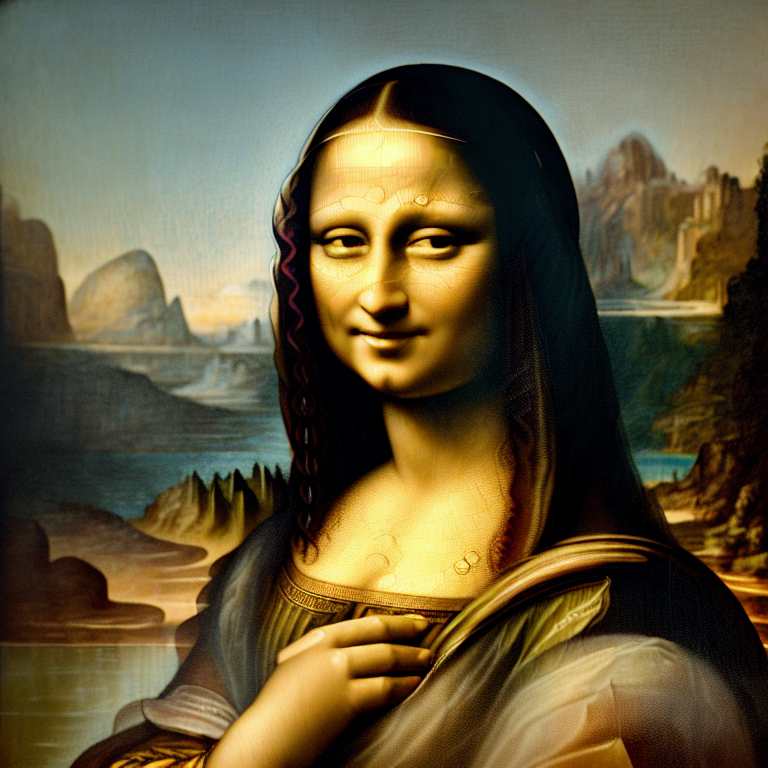
    The Mona Lisa is one of the most famous paintings in the world, but most people don’t realize how many secrets are hidden in this masterpiece. Painted by Leonardo da Vinci in the early 1500s, this portrait of a woman with a mysterious smile has fascinated people for centuries. When you look closely at the painting, you’ll discover hidden symbols, clever techniques, and even possible mistakes that tell us more about the artist and his methods.

    The painting shows a woman sitting in front of a dreamy landscape background. Her smile is what most people notice first – it seems to change when you look at it from different angles. This isn’t just your imagination. Leonardo used special painting techniques that make her expression appear different depending on where you stand and how the light hits the painting.

    The Hidden Symbols in the Mona Lisa

    Leonardo da Vinci was known for hiding symbols and codes in his artwork. The Mona Lisa is no exception. If you look closely at the background, you’ll notice two different landscapes on each side of the woman. The left side shows a path that gets smaller as it goes back, while the right side has a bridge that does the same thing. This creates a strange effect where the painting feels like it’s tilting slightly to the left.

    The woman’s clothing also holds secrets. Her dress has a very low neckline for the time period, which was unusual for a married woman. Some art experts think this might be a clue about who she really was. The veil over her hair was typically worn by pregnant women or those who had just given birth, which could mean the painting was created to celebrate a new baby in her family.

    Why Her Smile Changes

    The famous smile of the Mona Lisa isn’t just painted – it’s created through a special technique Leonardo invented called sfumato. This Italian word means “smoky” and describes how Leonardo blended colors and tones together without sharp lines. He used many thin layers of almost transparent paint to build up the face, especially around the mouth and eyes.

    This technique makes the smile appear to change when you look at it. If you focus on her eyes, the corners of her mouth seem to turn up in a slight smile. But if you look directly at her mouth, the smile seems to disappear. Leonardo understood how our eyes work and used this knowledge to create one of the most mysterious expressions in art history.

    The Mathematical Secrets

    Leonardo da Vinci loved mathematics and geometry, and you can find these elements hidden in the Mona Lisa. The painting fits perfectly into a golden rectangle, which is a special mathematical proportion that many artists believe creates the most pleasing shapes. If you measure the painting, you’ll find that the ratio of its length to its width is very close to 1.618, known as the golden ratio.

    Even her face follows mathematical rules. The distance between her eyes, the length of her nose, and the shape of her face all relate to each other through mathematical proportions. Leonardo believed that beauty came from perfect proportions, and he used these ideas to create a face that looks both realistic and ideal at the same time.

    The Landscape Mystery

    The background of the Mona Lisa is just as interesting as the woman herself. The landscape shows a mix of water, mountains, and strange rock formations that don’t match any real place. Some people think Leonardo created this imaginary landscape by combining elements from different places he had seen or read about.

    The two sides of the background don’t match perfectly. The left side is lower than the right side, creating a kind of imbalance. This wasn’t a mistake – Leonardo did this on purpose to create a more dynamic and interesting composition. The winding paths and distant water in the background also create a sense of depth that makes the painting feel three-dimensional.

    The Hidden Codes Theory

    Some people believe Leonardo hid secret codes and messages in the Mona Lisa. One popular theory suggests that if you look at the painting in a mirror, you can see hidden images or letters. Others think the positions of the woman’s hands form special symbols or that the landscape contains secret shapes.

    While many of these theories aren’t proven, they show how much people want to find hidden meanings in this painting. Leonardo was known to write in mirror script (backwards writing), so some believe he might have hidden messages that can only be read in a mirror. However, most art experts think the painting’s mysteries are more about technique and symbolism than secret codes.

    The Restoration Secrets

    When art experts look at the Mona Lisa very closely using special cameras and lights, they can see things that aren’t visible to the naked eye. These studies have revealed that Leonardo made many changes to the painting as he worked on it. For example, the position of the woman’s left hand was changed several times, and the background was painted differently than originally planned.

    These changes, called pentimenti, show us how Leonardo thought and worked. He didn’t just paint what he saw – he experimented and made adjustments to create the perfect composition. The fact that he kept changing things even in a small portrait shows how important this painting was to him.

    How Leonardo Created the Effect

    The way Leonardo painted the Mona Lisa was revolutionary for his time. He used oil paints, which were relatively new in Italy, and developed special techniques for using them. Instead of painting with thick, visible brushstrokes, he built up the image with many thin layers of paint. This created a soft, almost glowing effect that was unlike anything painted before.

    He also used a technique called aerial perspective in the background. This means he made the distant parts of the landscape look hazier and bluer to create the illusion of depth. This technique is still used by artists today and was one of Leonardo’s important contributions to painting.

    The Famous Theft and Its Impact

    In 1911, the Mona Lisa was stolen from the Louvre Museum in Paris. This theft actually made the painting much more famous than it had been before. When it was recovered two years later, millions of people wanted to see it. The theft created a kind of celebrity status for the painting that continues today.

    The theft also led to better security for artwork and more careful study of famous paintings. When the Mona Lisa was returned, it was examined very carefully, and this examination revealed many of the technical details we know about the painting today. The theft turned a great painting into a global icon.

    If you want to learn more about how other famous paintings hide secrets and meanings, check out our article on Why the Mona Lisa Smiles: The Science Behind Her Mystery. You can also discover how different art movements changed painting forever in our piece about How the Impressionists Broke All the Rules of Art.

    For those interested in seeing famous artworks in person, our guide on Top Tips for Visiting Art Galleries Like a Pro offers helpful advice for making the most of your museum visits. And if you’re curious about how art can help people heal, read about How Frida Kahlo Used Art to Heal Her Pain.

    Frequently Asked Questions (FAQ)

  • How Frida Kahlo Used Art to Heal Her Pain

    How Frida Kahlo Used Art to Heal Her Pain

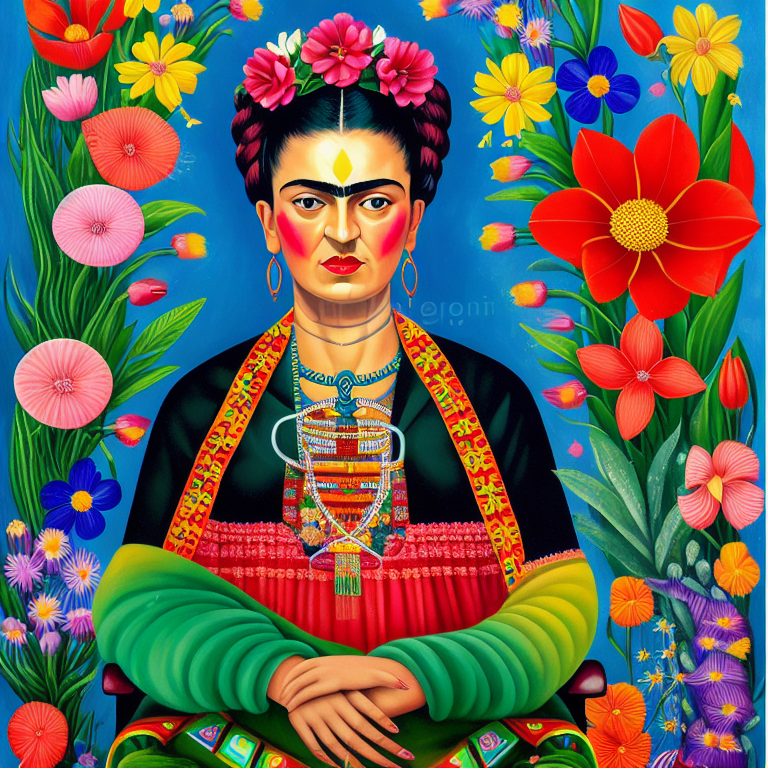
    When Frida Kahlo picked up a paintbrush after her devastating bus accident, she was not thinking about becoming famous. She was thinking about survival. The pain was constant, her body broken in more than thirty places, and her future uncertain. But through her art, Frida found a way to transform her suffering into something beautiful and meaningful. Her story is not just about creating paintings – it is about using creativity as medicine for the soul.

    The accident that changed everything happened when Frida was just eighteen years old. A streetcar collided with the bus she was riding, and an iron handrail pierced her body, breaking her spine, pelvis, ribs, and leg. She spent months in bed, wearing a plaster corset, unable to move. Most people would have given up, but Frida began to paint. Her parents hung a mirror above her bed so she could see herself, and she started creating self-portraits that showed not just her face, but her pain, her strength, and her unbroken spirit.

    Frida’s art was deeply personal from the very beginning. She painted what she knew best – her own body, her emotions, and her experiences. When doctors told her she might never walk again, she painted herself standing tall, surrounded by nature and hope. When the pain became unbearable, she painted it directly on the canvas, showing broken columns and exposed spines. This was not just art for art’s sake – it was art as therapy, as a way to process trauma and reclaim control over her body and her story.

    The symbolism in Frida’s work is powerful and intentional. She often included medical imagery like corsets, crutches, and surgical tools, but she transformed them. Instead of showing weakness, these objects became part of her strength. In one famous painting, she wears a metal corset decorated with flowers and butterflies, turning a medical device into something beautiful. This transformation of pain into beauty became her signature style, and it resonated with people around the world who were also struggling with their own challenges.

    Color played a huge role in Frida’s healing process. She used bright, vibrant colors that reflected her Mexican heritage and her inner world. Even when painting dark subjects, she filled her canvases with life and energy. The colors were not just decorative – they were emotional medicine. Bright yellows and reds expressed her passion and vitality, while deep blues and greens connected her to nature and spirituality. Through color, she could express feelings that words could not capture.

    Frida’s connection to nature was another important part of her healing journey. She filled her paintings with plants, animals, and natural elements that represented growth, renewal, and resilience. Monkeys, which appear frequently in her work, symbolized protection and companionship. Flowers represented beauty and the cycle of life. By surrounding herself with these natural symbols, both in her art and in her actual garden at Casa Azul, Frida created a healing environment that nurtured her spirit.

    The physical act of painting was itself therapeutic for Frida. When she held a brush, she was no longer just a patient – she was an artist, a creator, someone with purpose and vision. The concentration required for painting helped her forget the pain, even if only for a little while. Each brushstroke was a small victory over her limitations. Over time, painting became as essential to her survival as medicine or physical therapy.

    Frida’s art also helped her process complex emotions about love, loss, and identity. Her relationship with fellow artist Diego Rivera was passionate but turbulent, and she painted their story with honesty and intensity. When she experienced miscarriages and could not have children, she transformed that grief into powerful imagery. Her paintings became a diary of her inner life, allowing her to express feelings that were too painful or complicated to speak aloud.

    The way Frida used art to heal continues to inspire people today. Her story shows that creativity can be a powerful tool for dealing with trauma, chronic pain, and emotional suffering. She proved that art does not have to be about perfect technique or commercial success – it can be about survival, about finding meaning in suffering, about transforming pain into something that can help others. Her legacy is not just in the paintings she left behind, but in the example she set for using art as medicine.

    Modern research supports what Frida discovered through her own experience. Studies have shown that creative expression can reduce stress, improve mood, and even help with physical pain management. Art therapy is now recognized as a legitimate form of treatment for people dealing with trauma, illness, and emotional challenges. Frida was practicing art therapy before it had a name, and her work continues to demonstrate its power.

    The impact of Frida’s healing journey through art extends far beyond her own life. She has become an icon for anyone who has faced adversity and found strength through creativity. Her paintings speak to people who are dealing with chronic illness, disability, heartbreak, and loss. She showed that it is possible to take the broken pieces of your life and create something whole and beautiful from them. This message of resilience and transformation continues to resonate with new generations of artists and art lovers.

    Frida’s approach to healing through art was holistic. She understood that mind, body, and spirit are connected, and she used her creativity to address all aspects of her being. She painted her physical pain, but she also painted her hopes, her dreams, her cultural identity, and her relationships. This comprehensive approach to healing through art is something that modern practitioners continue to study and apply in therapeutic settings.

    The accessibility of Frida’s art is another reason why her story of healing through creativity continues to inspire. She painted in a style that was direct and emotional, using symbolism that anyone could understand. You did not need an art degree to feel the power of her work. This accessibility made her message of healing through art available to everyone, not just art experts or collectors. She democratized the healing power of creativity.

    Frida’s legacy teaches us that healing is not about erasing pain or returning to some imagined perfect state. It is about finding ways to live fully and meaningfully with whatever challenges we face. Through her art, she showed that pain can be transformed, that suffering can have purpose, and that creativity can be a lifeline. Her story reminds us that we all have the capacity to use our own creativity to heal, to express, and to connect with others who share our struggles.

    Today, Frida Kahlo’s paintings hang in museums around the world, but their true power lies in their ability to speak to the human experience of pain and healing. Each painting is a testament to her courage, her creativity, and her determination to find beauty and meaning in the midst of suffering. Her story continues to inspire artists, therapists, and anyone who believes in the healing power of creativity.

  • The Secret Techniques Behind Picasso’s Cubism

    The Secret Techniques Behind Picasso’s Cubism

    Pablo Picasso changed art forever when he created Cubism. This revolutionary style broke objects into geometric shapes and showed them from multiple angles at once. But how did he actually do it? What secret techniques made his cubist paintings so powerful and unique?

    Picasso didn’t invent Cubism overnight. He developed his techniques through years of experimentation and careful study of other artists. The journey began around 1907 when he painted “Les Demoiselles d’Avignon,” a work that shocked the art world with its angular forms and African mask influences.

    The Geometric Breakdown Method

    Picasso’s first secret technique was breaking down objects into basic geometric shapes. He would look at a subject – say, a guitar or a human face – and mentally divide it into cubes, cylinders, spheres, and cones. This wasn’t random. He studied how light and shadow fell on these shapes in real life.

    The key was simplification. Picasso reduced complex forms to their essential geometric components. A nose became a triangle, an eye a circle, a shoulder a curved rectangle. This geometric approach allowed him to show the structure beneath the surface appearance.

    Multiple Viewpoint Composition

    The second major technique involved showing multiple viewpoints simultaneously. Instead of painting an object from one fixed position, Picasso would depict it from several angles at once. A face might show both profile and frontal views merged together. A guitar could display its front, side, and interior all in one painting.

    This technique challenged centuries of Western art tradition that emphasized single-point perspective. Picasso borrowed ideas from African and Iberian art, where figures often showed multiple aspects of the same subject. The result was a more complete representation of reality – not how something looks from one angle, but how it exists in space.

    The Color Restriction Strategy

    Picasso often limited his color palette in cubist works. During his “Analytical Cubism” period (roughly 1909-1912), he frequently used monochromatic schemes of browns, grays, and ochres. This wasn’t because he couldn’t use color well – he was actually a master colorist. The restriction served a purpose.

    By limiting color, Picasso directed attention to form, structure, and the relationships between shapes. Color can be distracting, drawing the eye to surface appearances. Without strong color contrasts, viewers focused on the geometric construction and spatial relationships he was exploring.

    Collage Integration Technique

    Around 1912, Picasso began incorporating collage elements into his cubist works. He would glue newspaper clippings, sheet music, wallpaper, and other materials directly onto the canvas. This technique, called “Synthetic Cubism,” added new dimensions to his work.

    The collage technique allowed Picasso to blur the line between reality and representation. A piece of newspaper glued to a painting was both itself and a representation of something else. This added conceptual depth to his work and influenced generations of artists who followed.

    The Fragmentation Process

    Picasso’s fragmentation technique involved breaking down forms into smaller and smaller pieces. He would take a simple object and divide it repeatedly until it became almost unrecognizable. Yet somehow, the essence of the original object remained visible.

    This process wasn’t about destroying the subject but revealing its inner structure. By fragmenting forms, Picasso showed how objects exist in space and time. A portrait might show a face in different emotional states simultaneously, or a still life might display objects at various moments of use.

    Perspective Manipulation Secrets

    Traditional perspective shows objects smaller as they recede into space. Picasso deliberately manipulated perspective rules to create his cubist effects. He would make distant objects appear large and close objects small, or show objects from contradictory perspective viewpoints in the same composition.

    This manipulation wasn’t random. Picasso understood traditional perspective perfectly – he used it deliberately to create tension and new ways of seeing. His perspective tricks forced viewers to engage actively with the painting, piecing together the multiple viewpoints into a coherent whole.

    The Sketch and Study Method

    Before creating major cubist paintings, Picasso made numerous preparatory sketches and studies. These weren’t just rough drafts but detailed explorations of how to break down and reconstruct his subjects. He would draw the same object dozens of times, each time simplifying it further.

    This methodical approach shows that Picasso’s cubist style, while appearing spontaneous, was actually the result of careful planning and analysis. The sketches reveal his thought process as he worked out how to represent three-dimensional reality on a two-dimensional surface.

    Material and Texture Experimentation

    Picasso experimented extensively with different materials and textures in his cubist works. He would mix sand into his paint for rough textures, use different types of paper in collages, and even incorporate non-traditional materials like wood and metal.

    These material experiments added another layer to his cubist explorations. The physical texture of the surface became part of the composition, creating a dialogue between the represented forms and the actual materials used to create them.

    The Influence of African and Iberian Art

    Picasso’s cubist techniques were heavily influenced by African and Iberian art he encountered in Paris museums and collections. He was particularly drawn to the simplified forms, geometric patterns, and multiple viewpoints in these works.

    The African mask he saw at the Trocadéro Museum in Paris profoundly influenced “Les Demoiselles d’Avignon.” The mask’s stylized features and multiple perspectives inspired Picasso to break away from traditional Western representation and develop his own visual language.

    Digital Age Connections

    While Picasso worked long before digital technology, his cubist techniques have surprising relevance to modern digital art. His multiple viewpoint approach is similar to how 3D modeling software represents objects from various angles. His fragmentation technique resembles pixelation and digital deconstruction.

    Contemporary artists continue to draw inspiration from Picasso’s cubist methods. Digital artists use software to create cubist-inspired works that would have been impossible in Picasso’s time, yet they’re building on the foundation he established.

    Legacy and Contemporary Impact

    Picasso’s cubist techniques continue to influence artists today. Contemporary painters, sculptors, and digital artists study his methods and adapt them to new media. His approach to breaking down and reconstructing reality remains relevant in an age of digital fragmentation and multiple perspectives.

    The principles he developed – geometric simplification, multiple viewpoints, material experimentation – are now fundamental concepts in modern and contemporary art education. Every art student learns about cubist techniques as a crucial step in understanding modern visual language.

    Frequently Asked Questions (FAQ)

    What exactly is Cubism and how did Picasso develop it?

    Cubism is an art movement that breaks objects into geometric shapes and shows multiple viewpoints simultaneously. Picasso developed it gradually between 1907 and 1914, influenced by African art, Cézanne’s paintings, and his own experiments with form and perspective.

    How long did Picasso’s Cubist period last?

    Picasso’s Cubist period spans roughly from 1907 to the early 1920s, though he continued to use cubist elements throughout his career. The movement is typically divided into “Analytical Cubism” (1909-1912) and “Synthetic Cubism” (1912-1914).

    What materials did Picasso use for his Cubist paintings?

    Picasso used traditional oil paints on canvas, but he also incorporated collage elements like newspaper, wallpaper, and sheet music. He experimented with different textures by mixing sand into paint and using various types of paper and other materials.

    Why did Picasso use such limited colors in many of his Cubist works?

    Picasso limited his color palette to focus attention on form, structure, and spatial relationships. By removing the distraction of strong colors, he could explore how shapes relate to each other in space more effectively.

    How can I learn to paint in a Cubist style?

    Start by studying basic geometric forms and how light affects them. Practice breaking down complex objects into simple shapes. Experiment with showing multiple viewpoints of the same subject. Study Picasso’s preparatory sketches to understand his process.

    Did Picasso invent Cubism alone?

    While Picasso is the most famous Cubist, he developed the style alongside Georges Braque. They worked closely together from 1907 to 1914, influencing each other’s work so much that sometimes their paintings were difficult to tell apart.

    Conclusion

    Picasso’s cubist techniques weren’t just artistic innovations – they were revolutionary approaches to seeing and representing reality. His geometric breakdown method, multiple viewpoint composition, color restriction strategy, and material experimentation created a new visual language that continues to influence artists today.

    The secret behind Picasso’s cubism wasn’t magic or random inspiration. It was careful study, methodical experimentation, and a willingness to break rules. He understood traditional artistic techniques perfectly, which allowed him to deliberately subvert them and create something entirely new.

    By studying these techniques, we can better understand not just Picasso’s work, but how art can challenge our perceptions and show us new ways of seeing the world around us. His legacy lives on every time an artist breaks down reality into fundamental forms and reassembles them in new and surprising ways.

  • Why Van Gogh Cut Off His Ear: The Shocking Truth

    Why Van Gogh Cut Off His Ear: The Shocking Truth

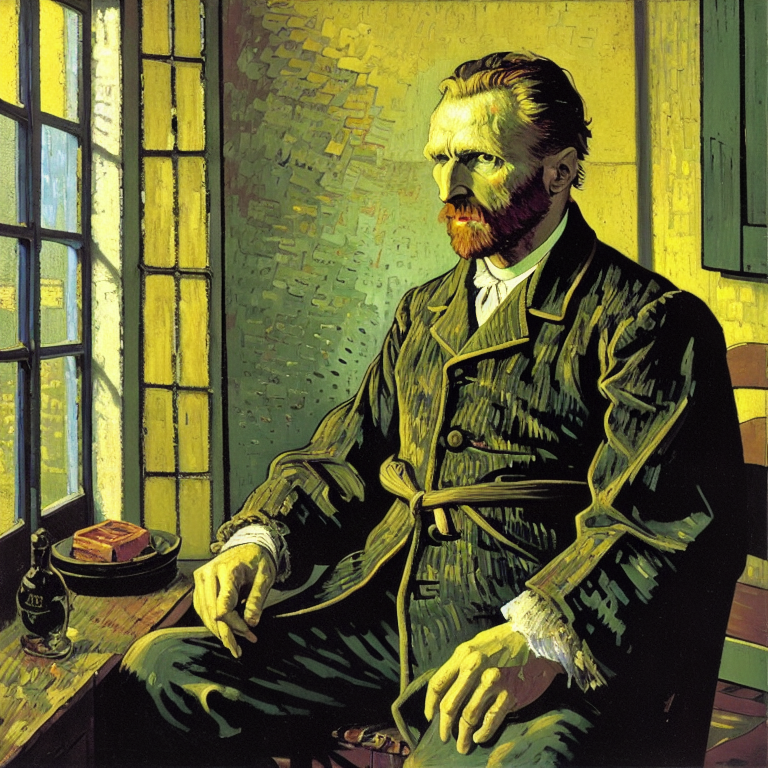
    When people think of Vincent van Gogh, two images often come to mind: his swirling, vibrant paintings and the shocking story of him cutting off his own ear. This dramatic moment has fascinated art lovers for over a century, but the true story behind it is far more complex than most people realize.

    The popular version of events – that Van Gogh simply cut off his ear in a fit of madness – misses the deeper, more human story of friendship, mental illness, and artistic passion that led to that fateful night in December 1888. As we explore what really happened, we’ll uncover not just the shocking truth about his ear, but also gain insight into the mind of one of history’s greatest artists.

    Let’s dive into the real story behind this infamous incident, separating fact from fiction and discovering what this moment tells us about Van Gogh’s life, his struggles, and his incredible artistic journey.