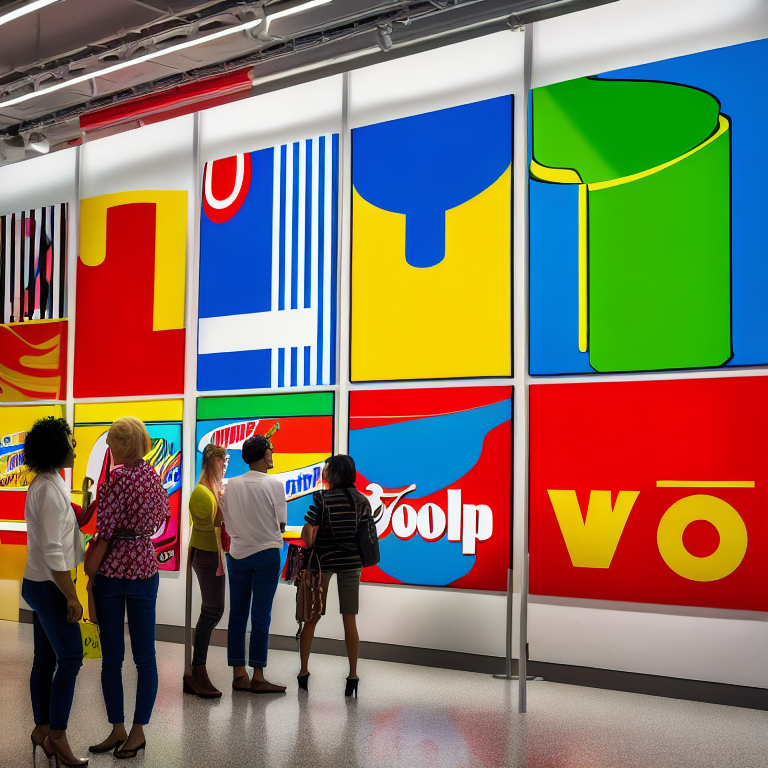
Walk into any modern art museum and you’ll see how pop art still shapes our world today. This art movement that started in the 1950s and 1960s wasn’t just about bright colors and famous faces – it was a mirror held up to society’s shopping habits and brand obsessions.
Pop art took everyday objects and turned them into art. Think about Andy Warhol’s Campbell’s soup cans or his colorful Marilyn Monroe portraits. These weren’t just pretty pictures. They were statements about how mass production and celebrity culture were changing everything.
Today’s pop art does the same thing but with a modern twist. Artists now use logos from tech companies, fast food chains, and social media platforms. They show how brands have become our new celebrities. The shopping bags we carry, the apps on our phones, and the clothes we wear all tell stories about who we are and what we value.
###CONTENT_START###
###SLUG_START###
pop-art-consumer-culture
###IMAGEPROMPTSTART###
A vibrant contemporary art gallery scene showing pop art pieces that blend classic Warhol-style Campbell’s soup cans with modern logos like Apple, Nike, and McDonald’s, creating a visual commentary on today’s consumer culture. The gallery has diverse visitors examining the artwork while smartphones capture the moment, symbolizing the intersection of art, commerce, and digital age consumption.
###IMAGEPROMPTEND###
###CONTENT_START###
Walk into any modern art museum and you’ll see how pop art still shapes our world today. This art movement that started in the 1950s and 1960s wasn’t just about bright colors and famous faces – it was a mirror held up to society’s shopping habits and brand obsessions.
Pop art took everyday objects and turned them into art. Think about Andy Warhol’s Campbell’s soup cans or his colorful Marilyn Monroe portraits. These weren’t just pretty pictures. They were statements about how mass production and celebrity culture were changing everything.
Today’s pop art does the same thing but with a modern twist. Artists now use logos from tech companies, fast food chains, and social media platforms. They show how brands have become our new celebrities. The shopping bags we carry, the apps on our phones, and the clothes we wear all tell stories about who we are and what we value.
How Social Media Changed Pop Art Forever
Social media has completely transformed how we see pop art today. Back in Warhol’s day, he said everyone would be famous for 15 minutes. Now, thanks to Instagram and TikTok, that’s literally true. People chase likes and followers the same way they used to chase money and status.
Modern pop artists capture this perfectly. They create pieces that look like Instagram feeds frozen in time. Bright colors, bold text, and familiar logos fill their canvases. These artists know we scroll through hundreds of images every day. They make art that stops us in our tracks and makes us think about what we’re really consuming.
The connection between social media and pop art goes deeper than just appearance. Both are about mass production and quick consumption. We swipe through posts in seconds, just like we used to flip through magazines. Pop art today reflects this fast-paced digital world we live in.
The Rise of Brand Worship in Modern Art
Brands have become the new religion in our society. People line up for hours to get the latest iPhone. They wear logos like badges of honor. Pop artists today show this obsession with brands in their work. They take familiar logos and twist them, making us question why we care so much about these symbols.
Think about how many people would recognize the Nike swoosh or the Apple logo. These symbols mean more to us than just products. They represent lifestyles, values, and identities. Pop art holds up these symbols and asks us to think about what they really mean.
Some artists go even further. They create fake brands or mix real ones together in strange ways. This makes us question the line between reality and marketing. It shows how brands have taken over our thinking without us even noticing.
Digital Tools Changing Pop Art Creation
Technology has given pop artists new ways to create their work. Digital tools let them make art faster than ever before. They can copy, paste, and manipulate images with just a few clicks. This mirrors how we consume media in our daily lives.
Artists use software to create pieces that look like they came straight from a computer screen. Bright colors, sharp lines, and perfect symmetry are common. These digital elements speak to our screen-based lives. We spend hours looking at pixels, so why shouldn’t art reflect that?
Some artists even create pieces that only exist online. They use websites and social media as their canvas. This new form of pop art is instantly shareable and completely disposable. It fits perfectly with our digital consumption habits.
Shopping as Performance Art
Going to the mall or browsing online stores has become a form of entertainment. We don’t just buy things – we experience them. Pop art today captures this shopping-as-entertainment idea perfectly.
Artists create pieces that look like store displays or online shopping carts. They show how we’ve turned buying things into a game. Limited edition drops, flash sales, and loyalty programs all keep us hooked. Pop art reveals how these shopping experiences are carefully designed to trigger our desires.
Some artists take this further by creating fake stores or pop-up shops as their art. These spaces blur the line between art and commerce. They make us question whether we’re looking at art or shopping for products.
The Environmental Cost of Consumer Culture
Pop art today doesn’t just celebrate consumer culture – it also criticizes it. Many artists use their work to show the environmental damage caused by our shopping habits. They create pieces from trash or show mountains of discarded products.
These artists want us to see the hidden costs of our consumption. The cheap clothes we buy, the fast food we eat, and the gadgets we upgrade all have environmental impacts. Pop art makes these invisible costs visible through shocking images and installations.
Some artists create pieces that slowly decay or change over time. This shows how our consumer goods also don’t last. We buy things, use them briefly, and throw them away. Pop art reveals this cycle of consumption and waste.
How Pop Art Influences Advertising Today
The line between pop art and advertising has almost disappeared. Many ads today use the bright colors and bold graphics that were once only found in art galleries. Companies know that pop art style grabs attention and feels modern.
Some brands even commission pop artists to create limited edition products. This creates a strange loop where art influences advertising, which then influences more art. Pop artists today often work both in galleries and for commercial clients.
This mixing of art and advertising shows how deeply consumer culture has changed. We can’t always tell the difference between artistic expression and marketing anymore. Pop art today reflects this confusing blend of creativity and commerce.
The Future of Pop Art in a Changing World
As our world changes, pop art continues to evolve. Artists now deal with new forms of consumption like streaming services, subscription boxes, and virtual goods. They create pieces that show how these new ways of buying things are changing our lives.
Virtual and augmented reality offer new possibilities for pop art. Artists can create immersive experiences that surround viewers with consumer imagery. These new forms of pop art might only exist in digital spaces, reflecting our increasingly online lives.
The core of pop art remains the same though. It still holds up a mirror to our consumer culture and asks us to think about what we value. Whether through traditional paintings or digital creations, pop art continues to comment on how we live and what we buy.
How to Experience Pop Art Today
You can find pop art influences everywhere in modern culture. Look at the design of your favorite apps, the layout of shopping websites, or the graphics in video games. All of these show pop art’s lasting impact on visual culture.
Visit contemporary art galleries to see how today’s artists are using pop art techniques. Many pieces will feel familiar because they use the same visual language as advertising and social media. This familiarity is part of what makes pop art so powerful.
Pay attention to how pop art makes you feel. Does it make you want to buy something? Does it make you question your consumption habits? The best pop art creates these mixed reactions, showing how complicated our relationship with consumer culture really is.
Frequently Asked Questions (FAQ)
What makes something pop art instead of just commercial art?
Pop art uses commercial imagery to make statements about culture and society. It’s not just about selling products – it’s about questioning why we buy them and what they mean to us.
How has technology changed pop art?
Digital tools let artists create and share work faster than ever. Social media provides new platforms for pop art, while software allows for new techniques and styles that reflect our digital lives.
Why do companies use pop art style in their advertising?
Pop art style grabs attention and feels modern and fun. It also creates a sense of familiarity that can make people more comfortable with a brand or product.
Can pop art be political?
Yes, many pop artists use their work to comment on social and political issues. They often use consumer imagery to make statements about capitalism, inequality, or environmental problems.
Where can I see modern pop art?
Contemporary art galleries, museums, and even some public spaces feature modern pop art. You can also find pop art influences in advertising, social media, and product design all around you.
Conclusion
Pop art continues to be a powerful way to understand our consumer culture. It shows us how brands, products, and shopping have become central to our identities and daily lives. From the soup cans of the 1960s to today’s digital creations, pop art holds up a mirror to society’s shopping habits and asks us to think about what we see.
The movement has evolved with technology and changing consumer patterns, but its core purpose remains the same. Pop art reveals the hidden messages in our commercial culture and challenges us to think about our role as consumers. As our world becomes more digital and our consumption more complex, pop art will continue to adapt and reflect these changes.
Next time you see a piece of pop art, take a moment to really look at it. Think about what it’s saying about our consumer culture and how it makes you feel about your own shopping habits. That’s the power of pop art – it makes us see the ordinary in extraordinary ways and question the world of consumption we’ve built around ourselves.
Leave a Reply