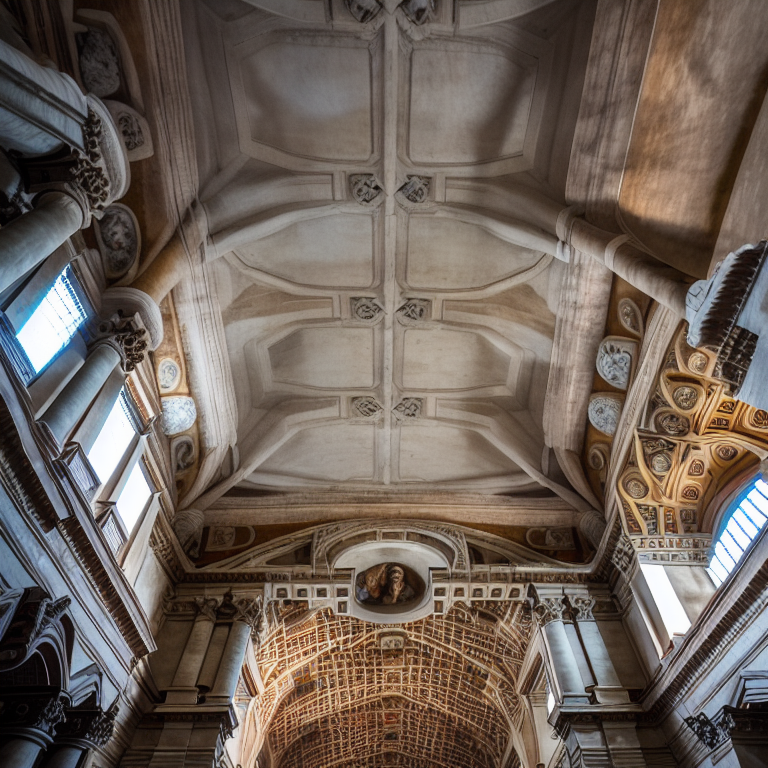
Imagine standing in the Sistine Chapel, your neck craned upward, staring at one of the most incredible artistic achievements in human history. The ceiling above you stretches like a painted sky filled with muscular figures, biblical scenes, and divine drama. This is Michelangelo’s masterpiece – a work that took four years of backbreaking labor, innovative engineering, and unparalleled artistic vision to complete.
The story of how Michelangelo painted this ceiling is not just about art – it’s about determination, ingenuity, and the human spirit’s capacity to create beauty against all odds. When Pope Julius II commissioned the young sculptor to paint the ceiling in 1508, Michelangelo was reluctant. He considered himself primarily a sculptor, not a painter, and the task seemed impossibly daunting. The ceiling was approximately 40 meters long and 13 meters wide – over 1,100 square meters of surface to cover. But what followed would become one of the most celebrated artistic achievements of the Renaissance.
The Challenge of the Canvas Above
The physical challenge of painting a ceiling presented problems that had never been fully solved before. Michelangelo and his team had to design a special scaffolding system that would allow painters to work above their heads for hours at a time. Unlike the popular myth suggests, Michelangelo didn’t lie on his back to paint. Instead, he stood on a scaffolding platform he designed himself, which was suspended just below the ceiling.
This position was incredibly uncomfortable and physically demanding. Michelangelo wrote letters describing how paint dripped into his face, how his neck became permanently strained, and how the effort of reaching upward caused constant pain. The conditions were so harsh that he later suffered from eye problems that affected his vision for months after completing the work.
The materials themselves posed another challenge. Michelangelo used the fresco technique, which involves applying paint to wet plaster. This method requires incredible speed and precision because the artist must complete each section before the plaster dries. Any mistake means chipping away the entire section and starting over. The chapel’s curved ceiling also meant that Michelangelo had to account for perspective – what looked correct from 20 meters below would appear distorted if painted flat.
Michelangelo’s Revolutionary Design Approach
When Michelangelo began planning the ceiling, he completely rejected the original commission to paint the twelve apostles. Instead, he proposed an ambitious program featuring over 300 figures arranged in a complex architectural framework. His design divided the ceiling into nine central panels depicting scenes from the Book of Genesis, surrounded by prophets, sibyls, and countless smaller figures.
The centerpiece panels show the creation of the world, from God separating light from darkness to the creation of Adam and Eve, their expulsion from Eden, and various scenes from Noah’s story. Surrounding these central narratives are massive painted architectural elements that don’t actually exist – pilasters, cornices, and brackets that create the illusion of a much more elaborate ceiling structure.
What makes Michelangelo’s approach revolutionary is how he integrated sculpture-like figures into a painted space. His figures have the weight, musculature, and three-dimensional presence of carved stone, yet they exist in a painted world. This synthesis of painting and sculpture would influence artists for centuries to come and helped establish the High Renaissance style.
The Color Revolution: From Dull to Dazzling
When the Sistine Chapel ceiling was first revealed in 1512, the colors were actually much darker and more subdued than what we see today. The vibrant blues, greens, and reds that characterize the ceiling now are the result of a massive restoration project completed in the 1990s. This restoration revealed that Michelangelo had used brilliant, expensive pigments including ultramarine blue made from lapis lazuli – a color so costly it was often worth more than gold.
The restoration process sparked intense debate in the art world. Some critics argued that the cleaning had removed a crucial “patina” that was part of the work’s character. Others celebrated the revelation of Michelangelo’s original brilliant palette. What’s clear is that the artist intended his work to be seen in living color, not the muted browns and grays that centuries of candle smoke and grime had created.
Michelangelo’s color choices were revolutionary for his time. He used color not just to describe form but to create emotional impact and guide the viewer’s eye across the vast ceiling surface. The prophet Jonah, for instance, sits in a massive painted throne with brilliant blue robes that draw the eye from anywhere in the chapel. This use of color as a compositional tool was innovative and influenced generations of artists who followed.
The Human Cost: Michelangelo’s Physical Sacrifice
The physical toll of painting the Sistine Chapel ceiling on Michelangelo cannot be overstated. He worked almost entirely alone after firing his assistants, who he felt couldn’t meet his exacting standards. This meant that every brushstroke on that ceiling came from his own hand – an almost unimaginable feat of endurance and concentration.
In a famous sonnet he wrote during the painting process, Michelangelo described his physical suffering: “I’ve grown a goitre by dwelling in this den, / As cats from stagnant streams in Lombardy, / Or in what other land they hap to be – / Which drives the belly close beneath the chin.” He goes on to describe how his stomach is pressed into his chin, his beard pointing toward heaven, and how his loins have “penetrated to my paunch.”
The work was so demanding that Michelangelo often slept in his clothes, too exhausted to change. He maintained a furious pace, completing the entire ceiling in just over four years – an incredible achievement considering the scale and complexity of the work. The physical and mental strain was so intense that he suffered what we would now recognize as severe burnout and depression.
Engineering Marvels: The Scaffolding System
The scaffolding system Michelangelo designed was a feat of engineering in itself. Rather than build a structure that bridged the entire chapel (which would have required holes in the newly completed walls), he created a system of platforms supported by brackets inserted into holes in the wall near the top of the windows. These platforms could be moved as needed to access different parts of the ceiling.
This system had several advantages. It allowed natural light to enter the chapel from the windows below, essential for the detailed work Michelangelo was doing. It also meant that the walls remained undamaged – crucial since the lower portions had been painted by Botticelli and other Renaissance masters whose work Michelangelo respected.
The scaffolding had to support not just Michelangelo but also his materials – large quantities of wet plaster, pigments, brushes, and other supplies. It needed to be stable enough to allow precise work but also movable enough to access the entire ceiling surface. The fact that Michelangelo designed and implemented this system himself speaks to his genius as both an artist and an engineer.
Symbolism and Hidden Meanings in the Artwork
Every element of the Sistine Chapel ceiling carries symbolic meaning, creating a complex visual theology that rewards careful study. The arrangement of figures isn’t random – it follows a carefully planned program that tells the story of humanity’s relationship with God, from creation through fall and eventual redemption.
The famous Creation of Adam panel, where God’s finger nearly touches Adam’s, is perhaps the most recognized image from the ceiling. But few notice the hidden details: God is depicted in a swirling cloak that many art historians believe represents a human brain, suggesting that God is not only giving Adam life but also the gift of intellect and consciousness.
The sibyls and prophets surrounding the central panels represent the anticipation of Christ’s coming – the pagan sibyls foretelling what the Hebrew prophets proclaimed. Each figure is individualized with specific attributes and expressions that convey their unique character and message. The Libyan Sibyl, for instance, is shown with a massive book, representing wisdom, while her powerful physique demonstrates Michelangelo’s mastery of human anatomy.
The Legacy: How It Changed Art Forever
When Michelangelo unveiled the completed ceiling in October 1512, it immediately established new standards for what painting could achieve. The combination of monumental scale, complex composition, and anatomical precision set a benchmark that influenced artists for generations. Students traveled from across Europe to study the ceiling, making Rome a major center of artistic pilgrimage.
The impact on artistic technique was profound. Michelangelo’s handling of the male nude figure – powerful, muscular, and emotionally expressive – became the standard for academic art training for centuries. His integration of architecture, sculpture, and painting into unified compositions influenced everything from Baroque ceiling paintings to modern installation art.
Perhaps most importantly, the Sistine Chapel ceiling demonstrated that a single artist could conceive and execute a work of such complexity and scale that it seemed to redefine the boundaries of human achievement. This idea – that art could be a vehicle for individual genius to express universal truths – became a cornerstone of Western artistic tradition.
Frequently Asked Questions (FAQ)
How long did it take Michelangelo to paint the Sistine Chapel ceiling?
Michelangelo worked on the ceiling for approximately four years, from 1508 to 1512. This timeline is remarkable considering the scale of the work – over 1,100 square meters containing more than 300 figures. He worked almost entirely alone after dismissing his assistants, making this one of the most intensive solo artistic endeavors in history.
Did Michelangelo really paint while lying on his back?
No, this is a common myth. Michelangelo actually stood on specially designed scaffolding platforms that allowed him to work directly facing the ceiling from a close distance. While this position was extremely uncomfortable and caused significant physical strain, it was not the same as lying flat on his back. Letters and accounts from the time confirm he stood while working.
How much did the Sistine Chapel ceiling restoration cost?
The major restoration of the Sistine Chapel ceiling, completed between 1980 and 1994, cost approximately $3.5 million. This controversial restoration removed centuries of dirt, soot, and previous restoration attempts to reveal Michelangelo’s original bright color palette. The project was funded by Nippon Television Network Corporation of Japan in exchange for the exclusive rights to photograph and videotape the restoration process.
Can visitors still see the original colors Michelangelo used?
Yes, thanks to the restoration completed in the 1990s, visitors can now see the ceiling much closer to how Michelangelo originally painted it. The restoration revealed brilliant blues, greens, and reds that had been obscured by centuries of grime. However, some debate continues about whether the cleaning removed a desirable patina or revealed the true intended appearance of the work.
Why did Michelangelo agree to paint the ceiling if he was primarily a sculptor?
Initially, Michelangelo was reluctant and tried to refuse the commission from Pope Julius II. However, the Pope was insistent, and Michelangelo felt he couldn’t refuse such a powerful patron. Ironically, this commission that he initially saw as a burden became the work that secured his reputation as one of the greatest artists of all time, demonstrating his versatility across multiple artistic disciplines.
How has the Sistine Chapel ceiling influenced modern art?
The influence of the Sistine Chapel ceiling extends far beyond Renaissance art. Its impact can be seen in modern and contemporary art through the emphasis on the artist as individual genius, the integration of different artistic disciplines, and the use of the human figure to express complex ideas and emotions. Artists from the Baroque period through to modern times have studied and been inspired by Michelangelo’s innovative compositions and powerful figure work.
Conclusion
The story of how Michelangelo painted the Sistine Chapel ceiling is more than just an art history lesson – it’s a testament to human creativity, perseverance, and vision. Against physical discomfort, technical challenges, and personal doubt, Michelangelo created a work that continues to inspire awe nearly 500 years after its completion.
What makes this achievement even more remarkable is how it transcends its religious context to speak to universal human experiences. The struggle between divine and mortal, the beauty and pain of the human body, the quest for knowledge and meaning – these themes resonate regardless of one’s faith or background.
Standing beneath that painted ceiling today, we’re not just looking at art – we’re witnessing the moment when one artist pushed the boundaries of what was possible and showed the world what the human spirit could achieve. Michelangelo’s Sistine Chapel ceiling remains a powerful reminder that with vision, dedication, and courage, we can create beauty that transcends our own limitations and speaks to generations yet unborn.
If you’re fascinated by artistic masterpieces and their hidden stories, you might enjoy exploring other incredible works like the hidden meanings in Leonardo da Vinci’s Mona Lisa or discovering how Frida Kahlo used art to heal her pain. Each of these stories reveals another facet of how art connects us to the deepest parts of the human experience.
Leave a Reply